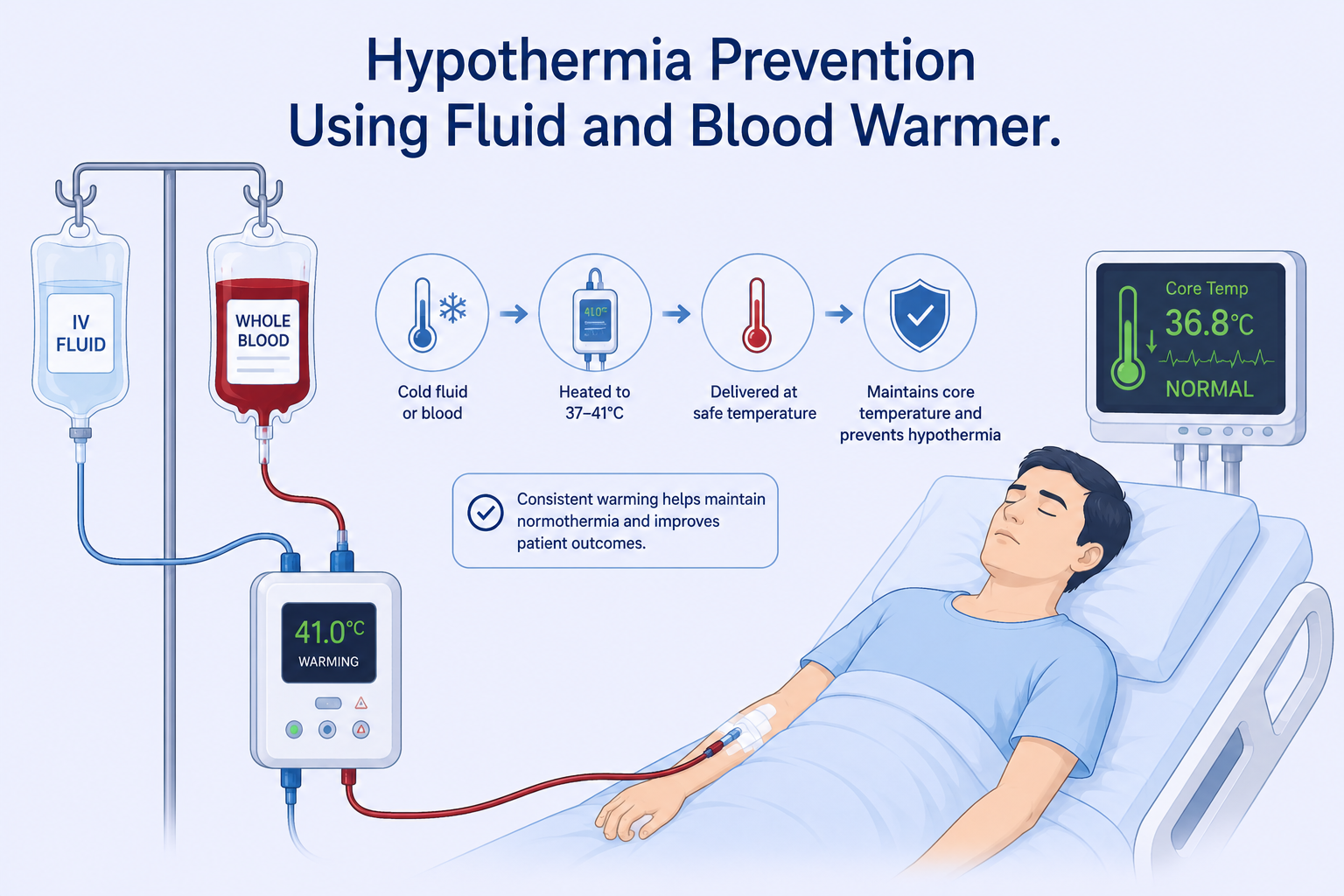
Fluid and Blood Warmer: Preventing Transfused Hypothermia

Maintaining normothermia during transfusions is vital. Discover how fluid and blood warmers effectively prevent transfused hypothermia in critical care settings.
Understanding Transfused Hypothermia
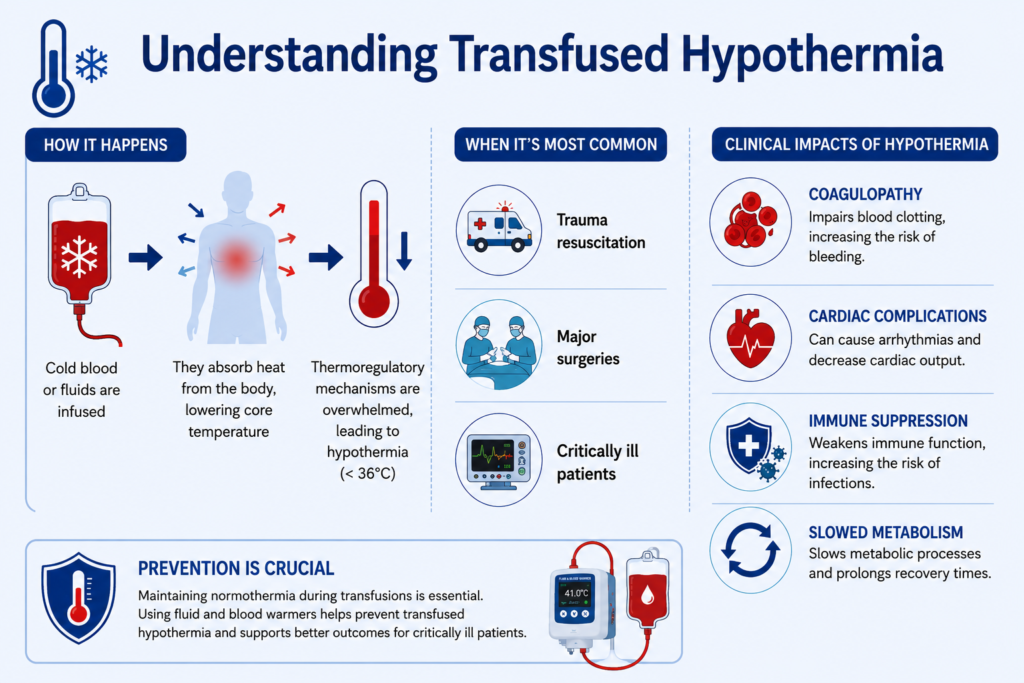
Transfused hypothermia occurs when cold fluids or blood lower the patient’s body temperature.
Large-volume transfusions increase hypothermia risk by disrupting the body’s thermal balance.
A core body temperature below 36°C (96.8°F) indicates hypothermia, and even mild hypothermia can have significant clinical impacts.
Understanding transfused hypothermia highlights the importance of using fluid and blood warmers.
Introducing cold blood or fluids into the body rapidly draws heat from the surrounding tissues, reducing the core body temperature.
Rapid administration of large volumes of cold blood or fluids during trauma resuscitation, major surgery, or critical care significantly increases heat loss.
When heat loss exceeds the body’s ability to regulate temperature through mechanisms such as shivering and vasoconstriction, the core body temperature drops rapidly.
This can cause a cascade of adverse physiological responses, further complicating the patient’s condition.
The ramifications of hypothermia are extensive and can impact nearly every organ system.
Hypothermia reduces the blood’s clotting ability, leading to coagulopathy and a higher risk of bleeding.
It can also cause cardiac complications such as arrhythmias and decreased cardiac output.
Moreover, hypothermia slows down metabolic processes and impairs immune function, increasing the risk of infections and prolonging recovery times. Understanding these risks underscores the necessity of maintaining normothermia during transfusions.
The Importance of Maintaining Normothermia
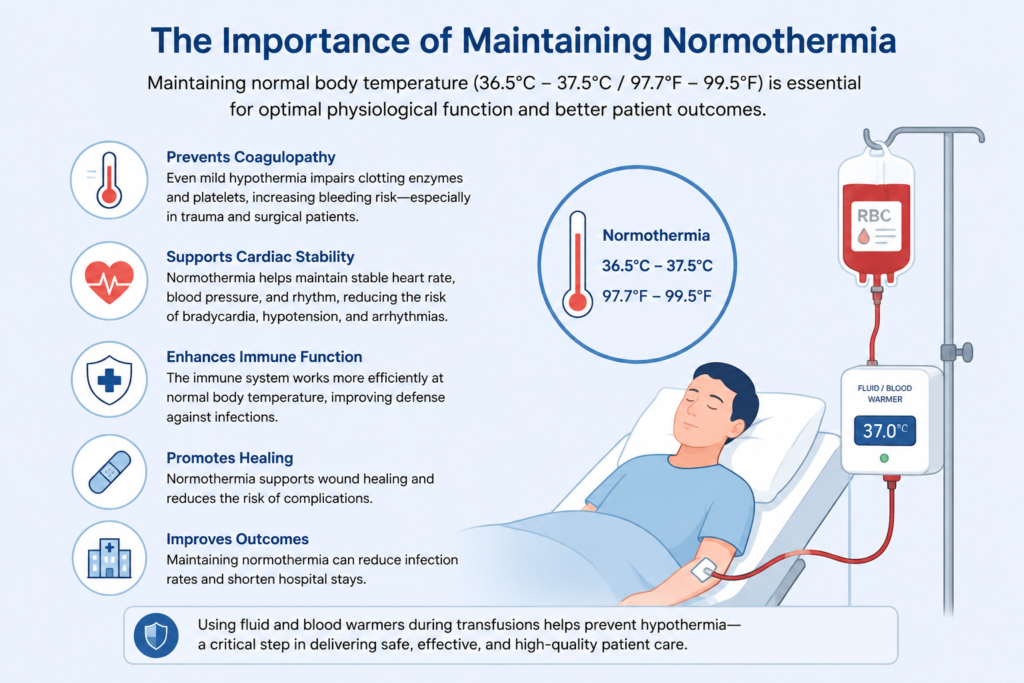
Maintaining normothermia, or normal body temperature, is critical in ensuring optimal physiological functioning and improving patient outcomes.
The body maintains normothermia when the core temperature remains between 36.5°C and 37.5°C (97.7°F to 99.5°F).
During medical interventions, especially transfusions, it is imperative to uphold this temperature range to mitigate the risks associated with hypothermia.
Normothermia supports various bodily functions, including enzymatic activity, cardiovascular stability, and the efficiency of the immune system.
One of the primary reasons for maintaining normothermia is to prevent coagulopathy.
Even mild hypothermia impairs clotting enzymes and platelets, increasing the risk of bleeding.
This is particularly critical in trauma patients or those undergoing major surgeries, where maintaining hemostasis is crucial. Additionally, normothermia helps in maintaining optimal cardiac function.
Hypothermia can cause bradycardia, hypotension, and arrhythmias, compromising heart function.
Normothermia also plays a significant role in reducing the risk of infections.
Normal body temperature supports efficient immune function and helps white blood cells fight infections.
Furthermore, maintaining normothermia can improve wound healing and reduce the length of hospital stays.
Fluid and blood warmers play a vital role in safe transfusion care.
How Fluid and Blood Warmers Work
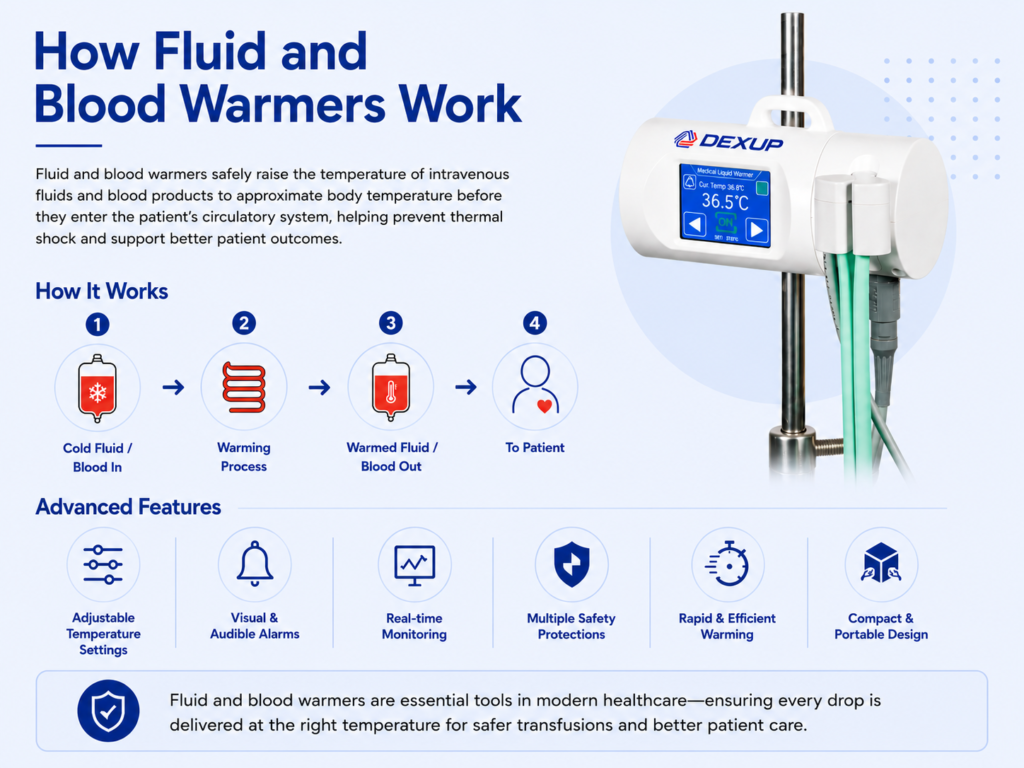
Fluid and blood warmers heat IV fluids and blood to near body temperature before administration.
These devices warm fluids and blood using heating plates, water baths, or dry heat systems.
Fluid and blood warmers prevent thermal shock by safely warming fluids before infusion.
Fluid and blood warmers safely heat IV fluids and blood to optimal temperatures.
This precise control protects blood cells from damage and prevents proteins in the fluids from denaturing.
Built-in sensors continuously monitor and adjust fluid temperature for safe warming.
They deliver warmed fluids consistently, helping maintain stable patient body temperature.
Modern warmers provide precise temperature control, rapid warming, and built-in safety features.
Devices such as the DEXUP Fluid Warmer series combine compact design, intelligent monitoring, and controlled heating technology to help clinicians maintain normothermia during transfusions and infusion therapy.
Modern warmers offer adjustable temperatures, alarms, and safety features for critical care applications.
There are different designs and technologies used in fluid and blood warmers, including in-line warmers, infusion pumps with integrated warming capabilities, and portable warmers.
Each type offers specific applications and benefits, but all fluid and blood warmers share the same core purpose: to reduce the risk of hypothermia by warming all transfused fluids to body temperature.
By understanding how these devices function, healthcare providers can effectively incorporate them into their clinical practice to enhance patient care.
Types of Fluid and Blood Warmers
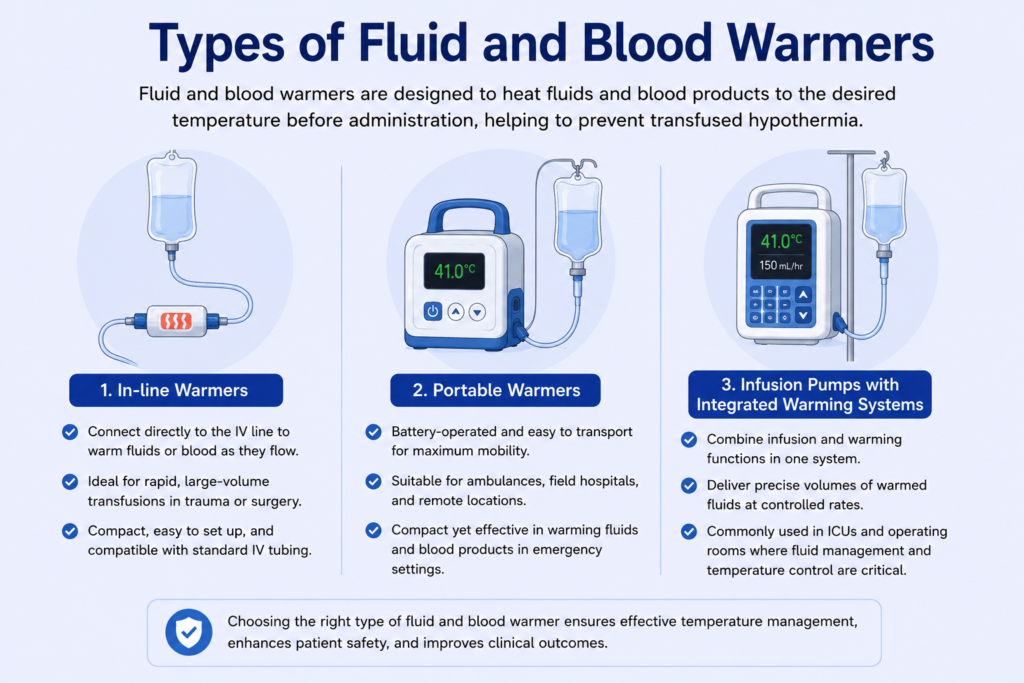
Fluid and blood warmers come in various forms, each tailored to specific clinical needs and settings.
The most common types include in-line warmers, portable warmers, and infusion pumps with integrated warming systems.
Understanding the different types can help healthcare providers choose the most appropriate device for their specific clinical scenarios.
In-line warmers connect directly to the IV line and heat fluids or blood products as they pass through the device before they enter the patient’s circulatory system.
Healthcare providers commonly use these warmers during trauma resuscitation, major surgeries, and other situations that require rapid, high-volume fluid or blood administration.
Their compact design, quick setup, and compatibility with standard IV tubing make them a practical choice for emergency and perioperative care.
Manufacturers design portable warmers for situations where mobility is essential.
Their battery-operated design allows healthcare providers to transport them easily, making them ideal for use in ambulances, field hospitals, and remote locations.
Despite their compact size, portable warmers are capable of effectively warming fluids and blood products to prevent hypothermia in emergency settings.
Infusion pumps with integrated warming systems combine the functions of a traditional infusion pump and a fluid warmer.
These devices allow clinicians to program precise fluid volumes and controlled infusion rates while delivering warmed fluids consistently.
Healthcare providers rely on them in intensive care units and operating rooms, where precise fluid management and temperature control play a critical role in patient outcomes.
By integrating warming capabilities with infusion control, these systems provide a comprehensive solution for preventing transfused hypothermia.
Clinical Guidelines for Using Fluid Warmers
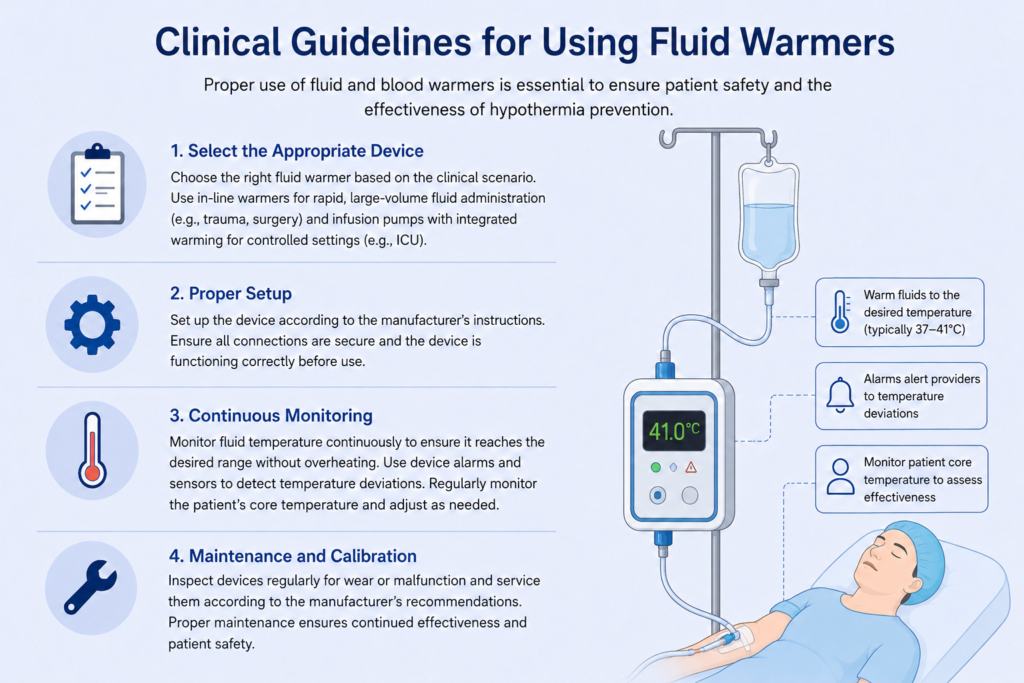
Proper use of fluid and blood warmers is essential to ensure patient safety and the effectiveness of hypothermia prevention. Clinical guidelines provide a framework for the appropriate selection, setup, and monitoring of these devices. Adhering to these guidelines can help healthcare providers minimize the risks associated with transfusions and optimize patient outcomes.
The first step in using fluid warmers is to select the appropriate device based on the clinical scenario.
For example, clinicians select an in-line warmer when trauma resuscitation or major surgery requires the rapid administration of large volumes of fluids.
In more controlled environments like the ICU, an infusion pump with integrated warming capabilities may be more suitable.
Healthcare providers should select the appropriate device, set it up according to the manufacturer’s instructions, secure all connections, and verify proper operation before use.
Monitoring is a critical component of using fluid warmers.
Clinicians should continuously monitor fluid temperature to ensure the warmer maintains the desired temperature without overheating the fluids.
Many fluid warmers come with built-in sensors and alarms to alert healthcare providers if the temperature deviates from the set range.
Clinicians should regularly monitor the patient’s core temperature to assess the effectiveness of the warming process and adjust the treatment as needed.
Maintenance and regular calibration of fluid warmers are also essential to ensure their continued effectiveness and safety.
Healthcare providers should routinely inspect fluid and blood warmers for wear or malfunction and perform maintenance according to the manufacturer’s recommendations.
By following these clinical guidelines, they can ensure the effective use of fluid and blood warmers to help prevent transfusion-associated hypothermia.
Benefits of Using Fluid Warmers in Transfusion Practices
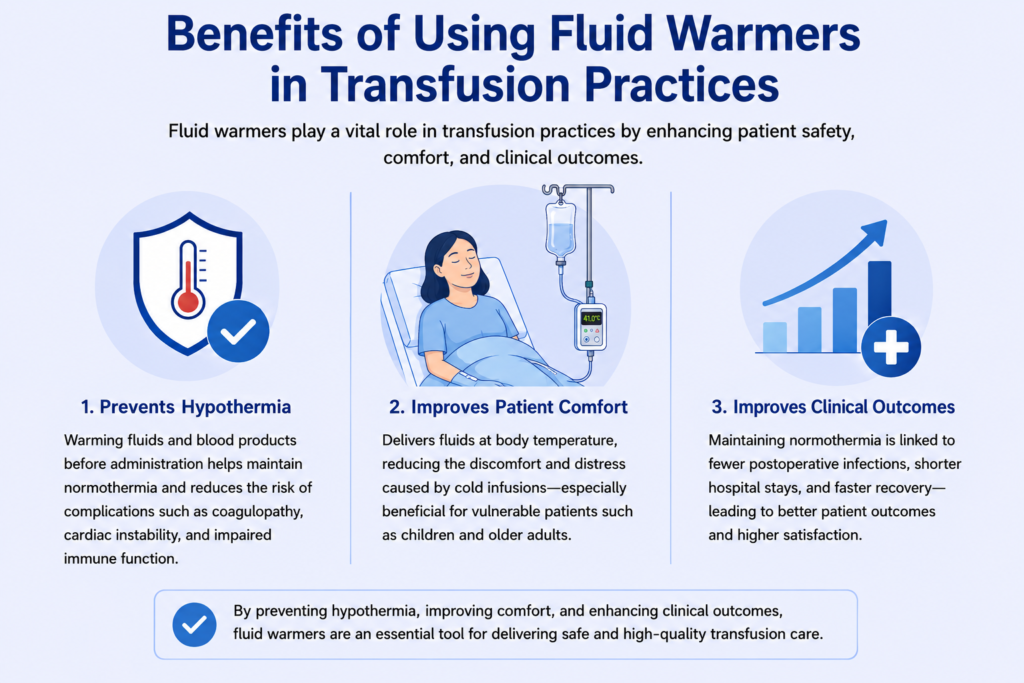
The use of fluid and blood warmers offers numerous benefits in transfusion practices, significantly enhancing patient care and outcomes.
One of the primary advantages is the prevention of hypothermia, which, as previously discussed, can have severe physiological consequences.
By warming fluids and blood products before administration, healthcare providers can maintain normothermia, thereby reducing the risks of complications such as coagulopathy, cardiac instability, and impaired immune function.
In addition to preventing hypothermia, fluid warmers improve patient comfort.
The infusion of cold fluids can be uncomfortable and distressing for patients, particularly those who are already vulnerable due to illness or injury.
By maintaining fluids at body temperature, fluid warmers improve patient comfort and reduce the physiological stress associated with cold fluid infusion.
This can be particularly beneficial in pediatric and geriatric populations, who may be more sensitive to temperature changes.
Another significant benefit of using fluid warmers is the potential for improved clinical outcomes.
Studies have shown that maintaining normothermia during surgery and critical care can reduce the incidence of postoperative infections, decrease the length of hospital stays, and improve overall recovery times.
By integrating fluid warmers into transfusion practices, healthcare providers can enhance the overall quality of care, leading to better patient outcomes and increased satisfaction.
Risks and Complications Associated with Hypothermia
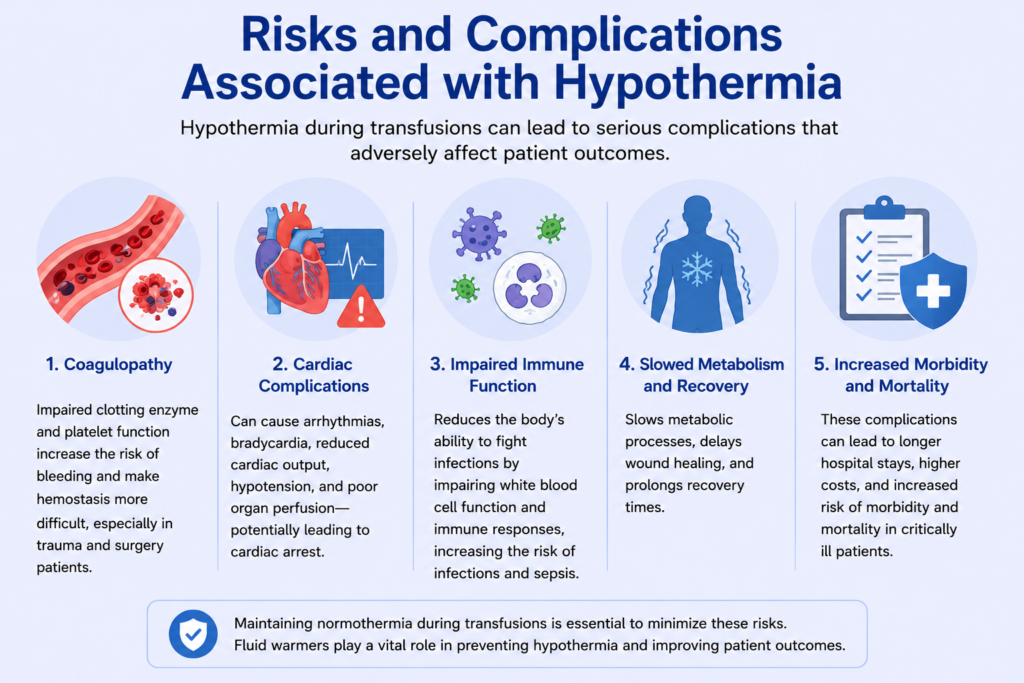
Hypothermia, particularly in the context of transfusions, poses several risks and complications that can adversely affect patient outcomes.
It can cause one of the most significant complications coagulopathy which impairs the blood’s ability to clot.
Hypothermia affects the function of clotting enzymes and platelets, increasing the risk of bleeding and making it more challenging to achieve hemostasis.
This is especially concerning in trauma patients or those undergoing major surgeries, where controlling bleeding is critical.
Hypothermia increases the risk of major cardiac complications.
As the body temperature drops, the heart’s electrical system can become unstable, leading to arrhythmias, bradycardia, and even cardiac arrest.
Hypothermia also reduces cardiac output, which can result in hypotension and reduced perfusion to vital organs.
These complications can be life-threatening, particularly in critically ill patients, making it essential to prevent hypothermia during transfusions.
Hypothermia also impacts the immune system, reducing the body’s ability to fight infections.
Lower body temperatures can impair the function of white blood cells and other immune responses, increasing the risk of infections and sepsis.
Additionally, hypothermia slows down metabolic processes, which can delay wound healing and prolong recovery times.
By understanding these risks, healthcare providers can better appreciate the importance of maintaining normothermia during transfusions and the role of fluid warmers in achieving this goal.
Conclusion: Best Practices for Preventing Hypothermia During Transfusions
Preventing hypothermia during transfusions is a critical aspect of patient care that can significantly impact outcomes.
By understanding the mechanisms and risks of transfused hypothermia, healthcare providers can appreciate the importance of maintaining normothermia and the role of fluid and blood warmers in achieving this goal.
Proper warmer selection and temperature monitoring help prevent transfusion-related hypothermia.
Regular maintenance and calibration of fluid warmers are also essential to ensure their continued effectiveness and safety.
The use of fluid and blood warmers offers numerous benefits, including the prevention of coagulopathy, cardiac complications, and infections, as well as improved patient comfort and clinical outcomes.
Case studies demonstrate the practical application of these devices in various settings, highlighting their effectiveness in maintaining normothermia and enhancing patient care.
The use of fluid and blood warmers offers numerous benefits, including the prevention of coagulopathy, cardiac complications, and infections, as well as improved patient comfort and clinical outcomes.
Case studies demonstrate the practical application of these devices in various settings, highlighting their effectiveness in maintaining normothermia and enhancing patient care.
As the field of fluid warming technology continues to evolve, future innovations will further improve the efficiency, usability, and safety of these devices.
By staying informed about these advancements and integrating best practices into clinical practice, healthcare providers can continue to enhance the quality of care and outcomes for patients undergoing transfusions.
References and Further Reading
WHO Guidelines on Blood Transfusion Safety
Hypothermia – Symptoms and causes – Mayo Clinic Mayo
View of Active versus Passive Warming In The Prevention of Inadvertent Intraoperative Hypothermia
NICE Guidelines on Inadvertent Perioperative Hypothermia