Mastering CPR: Essential Steps for Life-Saving Techniques

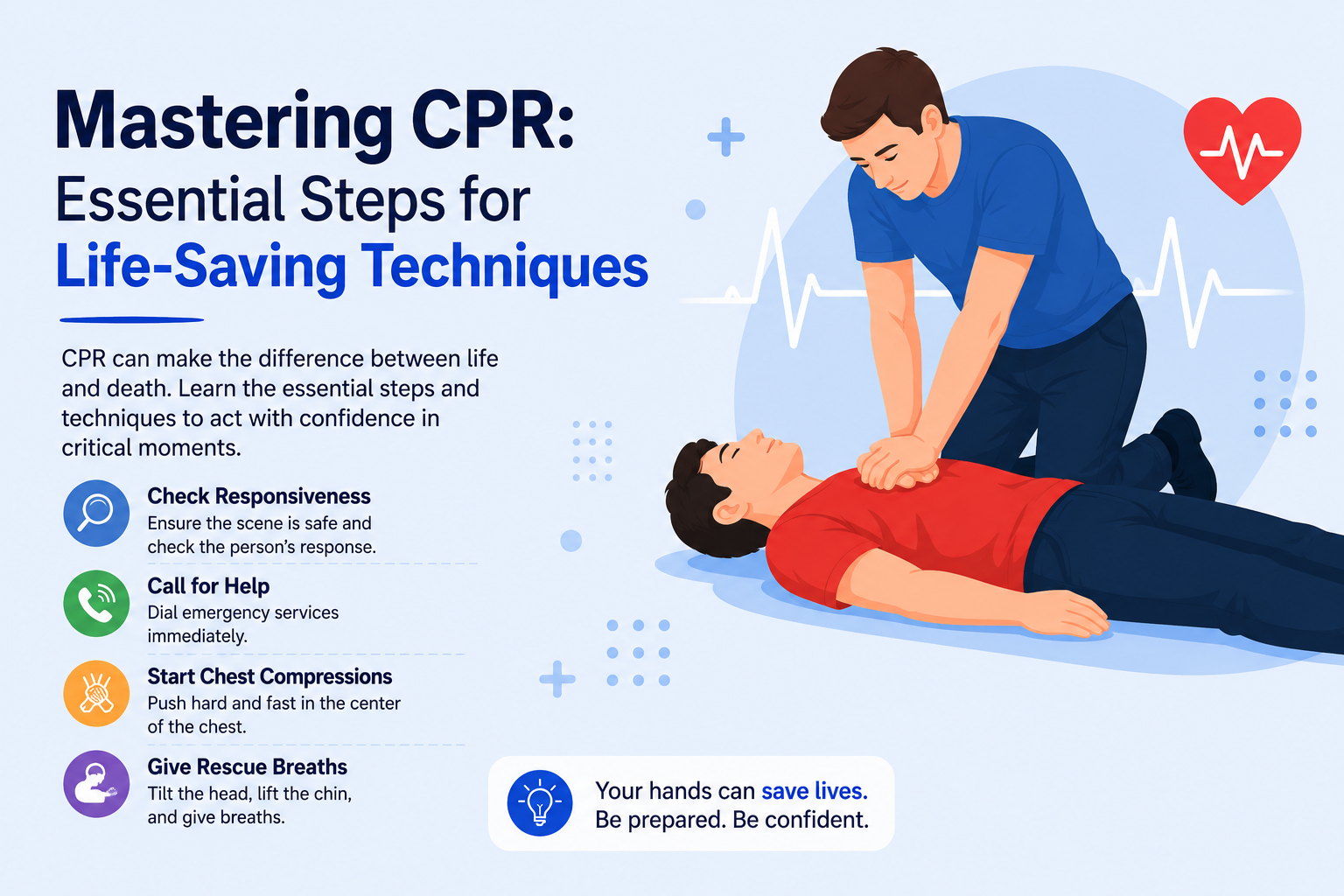
Mastering CPR is crucial for anyone, your quick action could save a life. Discover essential steps to confidently perform life-saving techniques in emergencies.
Understanding CPR: What You Need to Know
Cardiopulmonary resuscitation, or CPR, is a vital emergency procedure that can help save the life of someone experiencing cardiac arrest. When the heart stops beating, blood flow to the brain and other vital organs ceases, causing potential damage that can quickly become irreversible.
CPR aims to manually preserve brain function and keep the blood circulation active until professional medical help arrives. Understanding the fundamentals of CPR equips you with the knowledge to act swiftly and decisively in critical situations, potentially making the difference between life and death.
CPR combines chest compressions and rescue breaths to mimic the heart’s pumping action, thereby maintaining the flow of oxygenated blood. It’s a procedure that can be learned by virtually anyone, regardless of their medical background.
The American Heart Association (AHA) and other health organizations offer detailed guidelines and training programs designed to teach the essential steps and techniques of effective CPR.
The basics of CPR are relatively simple, yet the impact of performing it correctly can be profound. It’s important to remember that doing something is better than doing nothing, even if you’re not a trained professional.
Being aware of how to perform CPR and understanding its mechanics can empower you to take action when it’s needed most. This article will guide you through the essential steps and considerations to ensure you’re prepared to act in an emergency.
The Importance of CPR in Emergency Situations
Cardiac arrest can strike without warning, affecting people of all ages and backgrounds. In such scenarios, every second counts. Immediate CPR can double or even triple a victim’s chance of survival.
According to the THIP, approximately 700000 sudden cardiac deaths occur each year in the India. Sadly, many of these incidents result in fatalities because bystanders are often unprepared or hesitant to administer CPR.
CPR is not just about keeping the heart pumping; it’s about sustaining life until advanced medical care can be provided. When the heart stops, oxygen-rich blood is no longer supplied to the brain and other vital organs.
Brain cells begin to die within minutes, making timely intervention critical. By performing CPR, you are essentially buying time for the victim, maintaining circulation and oxygenation, and preventing irreversible brain damage.
Moreover, CPR is a skill that transcends professional boundaries. Whether you’re a doctor, teacher, parent, or simply a concerned citizen, the ability to perform CPR means you can contribute positively in an emergency.
The importance of widespread CPR knowledge cannot be overstated, as it significantly increases the likelihood of survival for cardiac arrest victims. By mastering CPR, you’re not only equipping yourself with a life-saving skill but also fostering a safer and more responsive community.
The Science Behind CPR: How It Works
The science behind CPR is rooted in understanding how the heart and lungs function together to sustain life.
The heart is a powerful muscle that pumps oxygenated blood throughout the body, while the lungs are responsible for exchanging carbon dioxide for oxygen during respiration. When cardiac arrest occurs, this critical system is disrupted, leading to a cessation of both heartbeats and breathing.
Chest compressions are at the core of CPR. By applying rhythmic pressure to the chest, you manually compress the heart, helping to circulate blood to the brain and other vital organs.
This mechanical action mimics the heart’s natural pumping mechanism, ensuring that oxygenated blood continues to flow. The depth and rate of these compressions are crucial; they must be sufficient to generate adequate blood flow without causing injury.
Rescue breaths complement chest compressions by providing oxygen to the victim’s lungs. When you blow air into the victim’s mouth, you inflate their lungs, allowing oxygen to enter the bloodstream.
This is particularly important because, even though chest compressions help circulate blood, oxygen must be available for the blood to carry to the body’s tissues. Together, chest compressions and rescue breaths form a synergistic process that sustains life until normal heart function can be restored.
Key CPR Techniques: Adult, Child, and Infant Differences
While the fundamental principles of CPR remain consistent, the techniques vary according to the age and size of the victim. Understanding these differences is crucial for effective intervention.
For adults, the focus is on deep and forceful chest compressions, while for children and infants, the approach is more delicate yet equally vital.
For adults, the recommended technique involves using both hands, with one hand placed over the other, to apply compressions to the center of the chest.
The compressions should be 2 to 6 inches deep, and the rate should be about 100 to 120 compressions per minute. Rescue breaths are given by tilting the victim’s head back, pinching the nose, and blowing air into the mouth until the chest rises.
When it comes to children, typically those aged 1 to 8 years, the technique is slightly adjusted. Use one hand for chest compressions, pressing down about 2 inches. The rate of compressions remains the same, but care must be taken to avoid excessive force.
For infants, those under 1 year, use two fingers to apply compressions to the center of the chest, pressing down about 1.5 inches. Rescue breaths for both children and infants are gentler, ensuring that the small lungs are not overinflated.
Step-by-Step Guide to Performing CPR
Performing CPR correctly involves a series of well-coordinated steps that anyone can learn. Here’s a detailed guide to ensure you’re prepared to act effectively in an emergency.
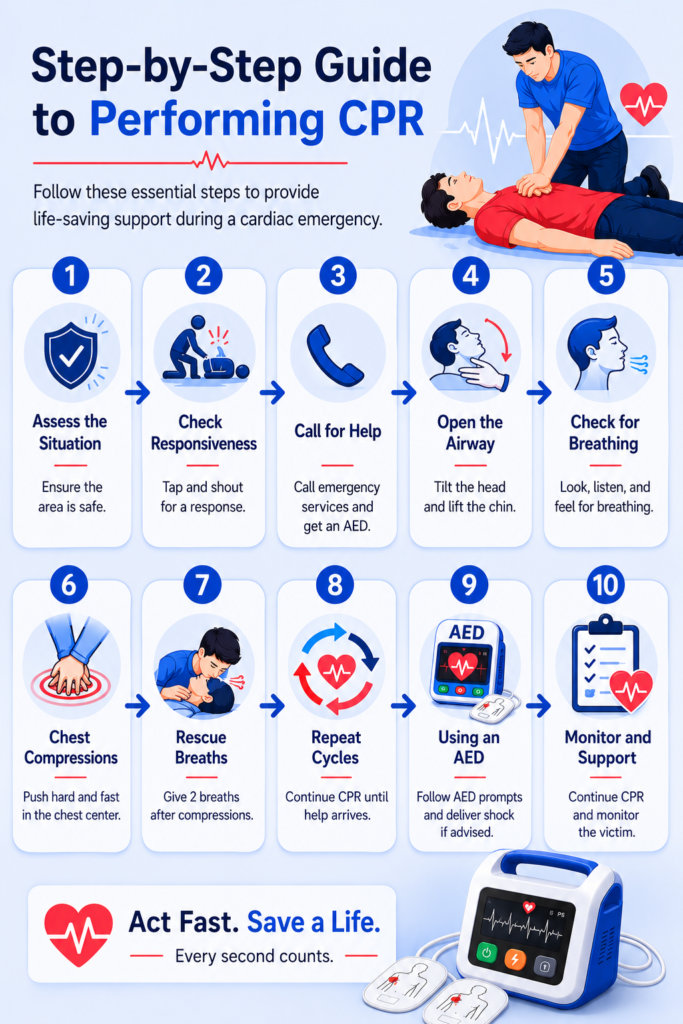
- Assess the Situation: Quickly check if the environment is safe for both you and the victim. Look for any immediate dangers that might need to be addressed before proceeding.
- Check Responsiveness: Gently shake the victim and shout to see if they respond. If there’s no response, proceed to the next steps.
- Call for Help: Dial emergency services immediately. If others are around, instruct someone specifically to call for help and retrieve an Automated External Defibrillator (AED) if available.
- Open the Airway: Place the victim on their back and tilt the head back slightly by lifting the chin. This helps to open the airway.
- Check for Breathing: Look, listen, and feel for signs of breathing for no more than 10 seconds. If the victim is not breathing or only gasping, begin CPR.
- Chest Compressions: Position your hands in the center of the victim’s chest. For adults, use both hands; for children, use one hand; and for infants, use two fingers. Compress the chest at least 2 inches deep for adults, about 2 inches for children, and 1.5 inches for infants.
- Rescue Breaths: After 30 compressions to adults and 15 compressions to children’s, give 2 rescue breaths. Pinch the victim’s nose, cover their mouth with yours, and blow until you see the chest rise. For infants, cover both the mouth and nose with your mouth.
- Repeat Cycles: Continue the cycle of 15 or 30 compressions and 2 breaths until medical professionals arrive or the victim shows signs of life.
- Using an AED: If an AED is available, turn it on and follow the prompts. Attach the pads to the victim’s bare chest as indicated and allow the AED to analyze the heart rhythm. If a shock is advised, ensure no one is touching the victim and deliver the shock.
- Monitor and Support: Keep performing CPR and following AED instructions until emergency responders take over or the victim regains consciousness.
By following these steps meticulously, you can provide the critical support needed to sustain life during a cardiac emergency.
Common Mistakes to Avoid When Administering CPR
Administering CPR can be daunting, especially in a high-stress situation. However, being aware of common mistakes can help you perform the procedure more effectively.
One frequent error is inadequate chest compressions. Compressions need to be deep and forceful enough to generate blood flow, but many people are hesitant to press hard enough. Remember, proper depth is crucial for effectiveness.
Another common mistake is improper hand placement. Hands should be positioned in the center of the chest, not too high or low, to ensure that the compressions are targeting the heart.
Incorrect hand placement can reduce the efficiency of compressions and potentially cause injury. Additionally, inconsistent compression rates can compromise the effectiveness of CPR. Maintaining a steady rhythm of 100 to 120 compressions per minute is essential.
Another common mistake is improper hand placement. Hands should be positioned in the center of the chest, not too high or low, to ensure that the compressions are targeting the heart.
Incorrect hand placement can reduce the efficiency of compressions and potentially cause injury. Additionally, inconsistent compression rates can compromise the effectiveness of CPR. Maintaining a steady rhythm of 100 to 120 compressions per minute is essential.
Lastly, ineffective rescue breaths can hinder the overall success of CPR. When giving breaths, ensure that the victim’s airway is open by tilting the head back and lifting the chin.
Avoid over-inflating the lungs, especially in children and infants, as this can cause further complications. By being mindful of these common mistakes, you can improve your CPR technique and increase the chances of a positive outcome.
The Role of AEDs in CPR: When and How to Use Them
Automated External Defibrillators (AEDs) are invaluable tools in cardiac emergencies, designed to be user-friendly for both medical professionals and laypersons.
An AED can analyze a victim’s heart rhythm and, if necessary, deliver an electrical shock to help re-establish an effective heartbeat. Understanding when and how to use an AED can significantly enhance the effectiveness of CPR.
AEDs are typically found in public places such as airports, schools, and shopping centers. When you encounter a cardiac arrest victim, one of the first steps should be to locate an AED if available. Once you have the device, turn it on and follow the audio and visual prompts.
The AED will instruct you to attach adhesive pads to the victim’s bare chest. It’s crucial to place the pads correctly, as indicated by the device or diagrams on the pads.
After the pads are in place, the AED will analyze the heart rhythm to determine if a shock is necessary. If a shock is advised, ensure that no one is touching the victim, then press the shock button when prompted.
After delivering the shock, or if no shock is advised, continue CPR until professional help arrives or the victim regains consciousness. The integration of an AED with CPR can dramatically increase the chances of survival in cardiac arrest cases.
CPR Training: Where to Get Certified
Getting certified in CPR is a straightforward process that can provide you with the confidence and skills to act in emergencies.
Various organizations offer CPR training courses, both online and in-person, to accommodate different learning preferences. The Indian Resuscitation Council Federation (IRC) and the Indian Red Cross Society are two of the reputable providers of CPR certification.
The IRC offers a range of training options, from basic CPR courses for the general public to advanced life support courses for healthcare professionals. Their courses often include hands-on practice with mannequins, allowing participants to simulate real-life scenarios.
The Indian Red Cross Society also provides comprehensive CPR training, with courses that cover adult, child, and infant CPR, as well as the use of AEDs.
In addition to these organizations, many community centers, schools, and workplaces offer CPR training sessions. Some employers may even require CPR certification as part of their safety protocols. Online courses are another convenient option, often featuring interactive modules and video demonstrations.
While hands-on practice is ideal, online courses can be a valuable starting point. Regardless of the method you choose, getting certified in CPR equips you with a crucial skill set that can make a life-saving difference.
Conclusion: Empowering Yourself and Others with CPR Skills
Mastering CPR is more than just acquiring a set of techniques; it’s about empowering yourself and others to act decisively in life-threatening situations.
The knowledge and skills gained from CPR training can transform ordinary individuals into heroes capable of making a profound impact. Whether you’re at home, work, or in a public setting, the ability to perform CPR can significantly increase the chances of survival for someone experiencing cardiac arrest.
By understanding the importance of CPR, familiarizing yourself with the science behind it, and learning the specific techniques for adults, children, and infants, you equip yourself with the tools necessary to save a life.
Avoiding common mistakes and knowing how to integrate AED use further enhances your effectiveness. Moreover, seeking CPR certification from reputable organizations ensures that you’re well-prepared to handle emergencies with confidence.
By spreading awareness and encouraging others to get trained, you contribute to a safer, more responsive community. In conclusion, mastering CPR is an invaluable skill that empowers you to act when it matters most, potentially saving lives and making a lasting impact.