Surgical Helmets: Essential Protection for Modern Operating Rooms

Why Advanced Protective Equipment Matters in Surgery
Modern operating rooms are designed to maintain the highest standards of sterility, safety, and efficiency.
While surgical techniques and medical technologies continue to evolve, one constant remains: protecting both patients and healthcare professionals from contamination risks.
Surgeons and operating room staff spend long hours performing complex procedures under intense lighting conditions while maintaining strict sterile protocols.
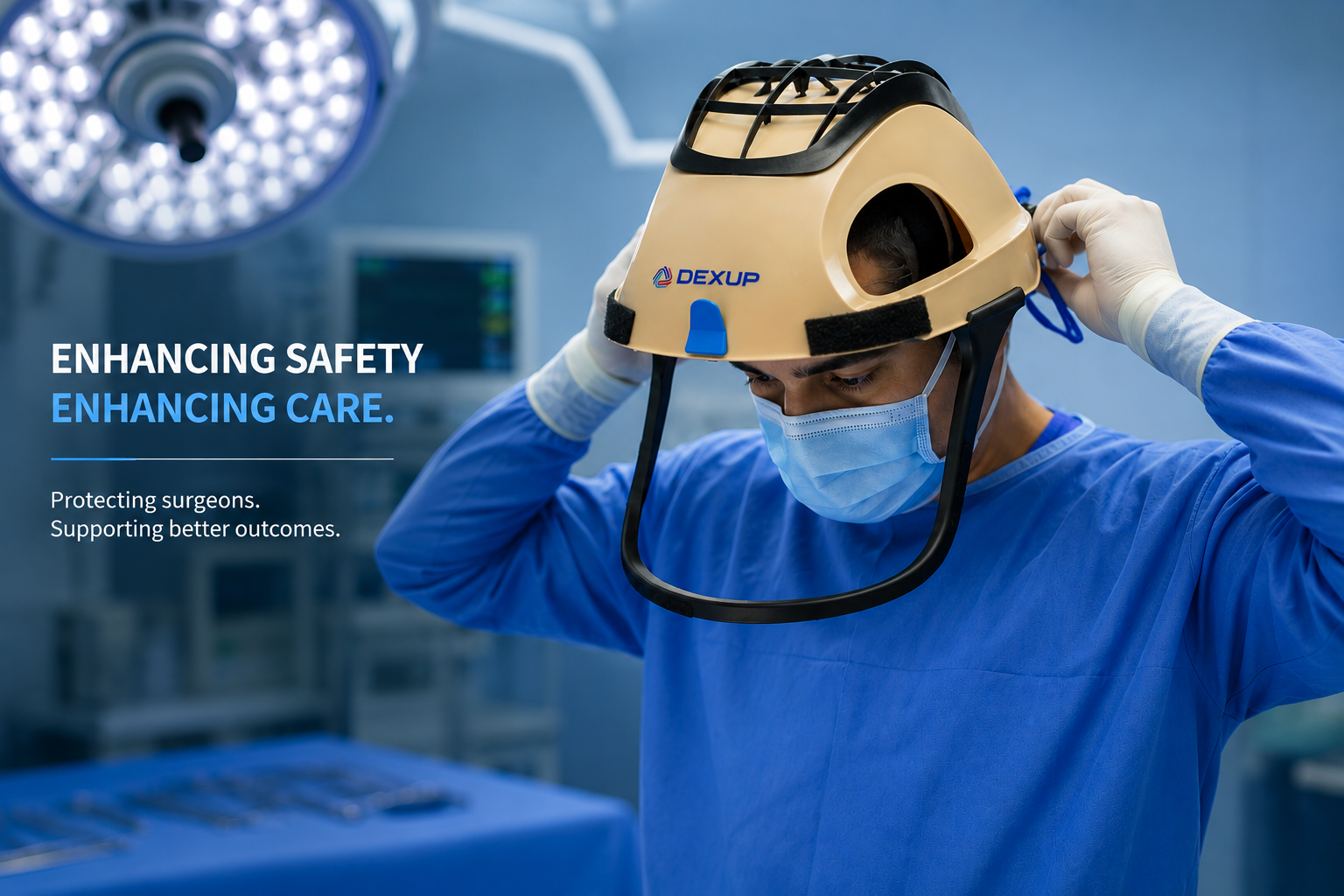
To support safety and comfort, hospitals increasingly rely on a combination of surgical helmets, surgical hoods, and PPE kits. Together, these protective systems help create a safer surgical environment while enhancing comfort and reducing fatigue for healthcare professionals.
In this guide, we’ll explore what surgical helmets, surgical hoods, and PPE kits are, why they are used, and how they contribute to infection control and surgical efficiency.
What Is a Surgical Helmet?
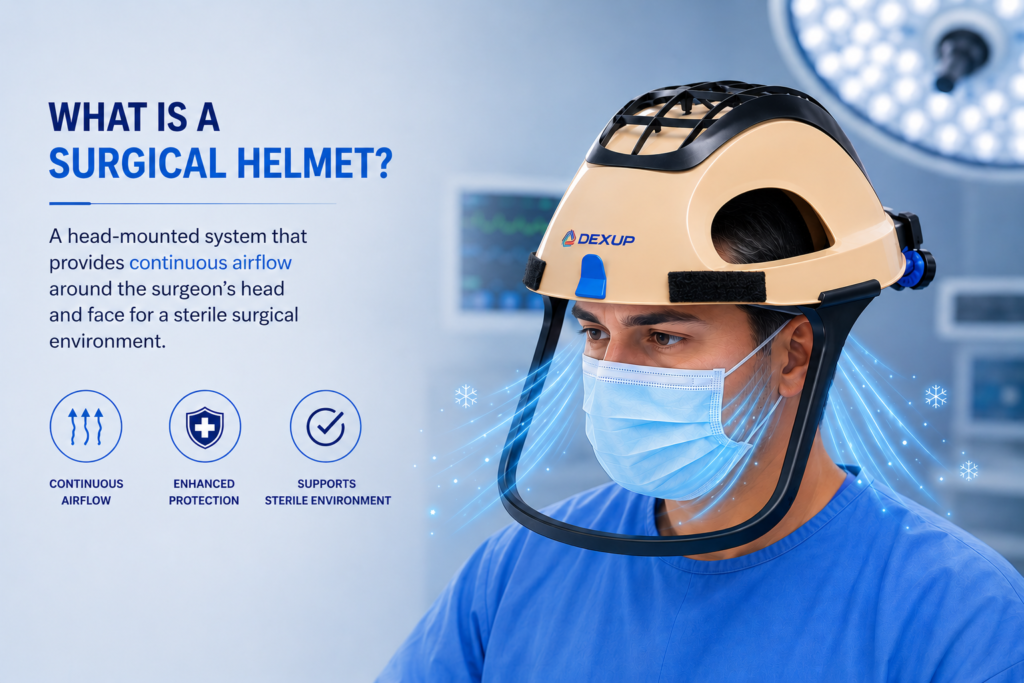
A surgical helmet is a specialized head-mounted system designed to provide continuous airflow around the surgeon’s head and face while supporting a sterile surgical environment.
Unlike conventional surgical caps, surgical helmets feature an integrated airflow mechanism that draws ambient air through filters and circulates it inside the helmet.
This helps improve comfort during lengthy surgical procedures by reducing heat buildup and maintaining airflow around the head and face.
Surgical helmets are commonly used in:
- Orthopedic surgeries
- Joint replacement procedures
- Trauma surgeries
- Spine surgeries
- Long-duration surgical procedures
These environments often involve extended operating times and increased physical exertion, making surgeon comfort an important factor.
Key Functions of a Surgical Helmet
A surgical helmet serves several important purposes:
1. Improved Air Circulation
One of the primary functions of a surgical helmet is maintaining airflow around the surgeon’s face and head. Continuous air circulation helps reduce discomfort caused by heat and perspiration during lengthy procedures.
2. Enhanced Comfort
Surgeries can last several hours. A well-designed helmet helps reduce thermal stress and improves overall comfort, allowing surgeons to remain focused throughout the procedure.
3. Support for Sterile Environments
When used with compatible surgical hoods and gowns, surgical helmets become part of a comprehensive protective system that supports operating room sterility protocols.
4. Reduced Fogging
Continuous airflow can help reduce visor fogging and maintain clear visibility, which is essential during delicate surgical procedures.
What Is a Surgical Hood?
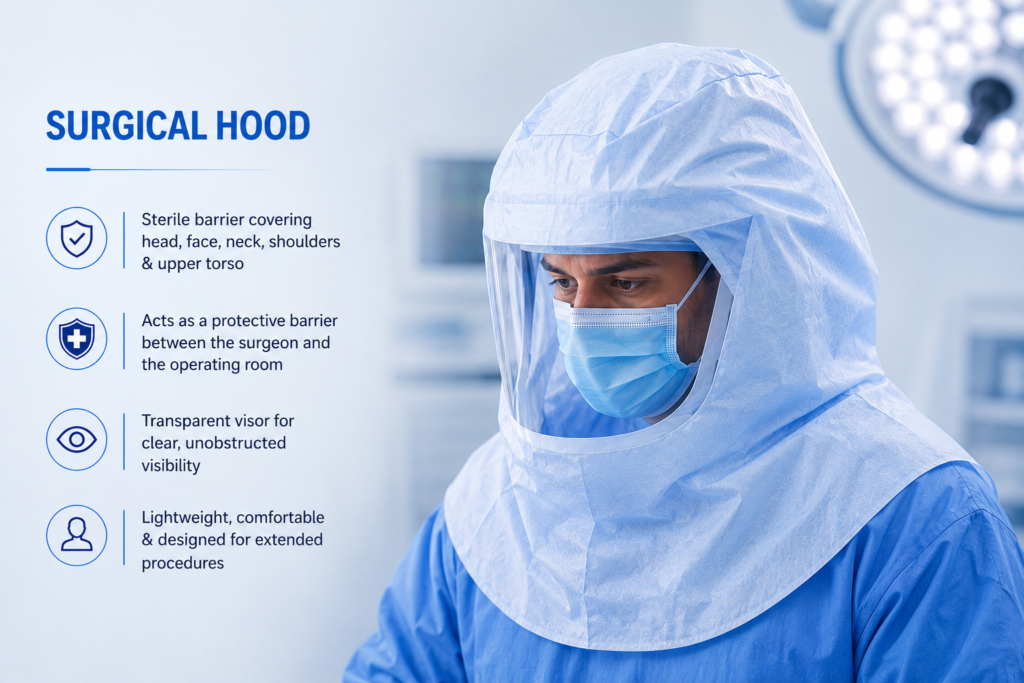
A surgical hood is a sterile, disposable covering that is worn over the surgical helmet.
While the helmet provides airflow and structural support, the surgical hood acts as the sterile barrier between the healthcare professional and the operating room environment.
The hood typically covers:
- Head
- Face shield area
- Neck
- Shoulders
- Upper torso
The transparent visor section allows surgeons to maintain an unobstructed view of the surgical field.
Why Surgical Hoods Are Used
Surgical hoods play a crucial role in maintaining sterile conditions.
Their primary functions include:
Barrier Protection
The hood helps minimize the release of skin particles, hair, and microorganisms from the wearer into the sterile surgical field.
Fluid Resistance
Many surgical hoods are designed to resist fluid penetration, providing additional protection during procedures where blood or bodily fluids may be present.
Sterility Maintenance
Since surgical hoods are generally single-use products, they help maintain high standards of hygiene and infection control.
Compatibility with Helmet Systems
Modern surgical hoods are designed specifically to fit over powered surgical helmet systems, ensuring airflow is maintained while preserving sterility.
Understanding PPE Kits in Surgery
A PPE (Personal Protective Equipment) kit refers to the collection of protective equipment worn by healthcare professionals to reduce exposure to contaminants and maintain sterile conditions.
In surgical settings, PPE serves as a critical layer of defense for both patients and medical personnel.
Components of a Surgical PPE Kit
A typical surgical PPE kit may include:
- Surgical gown
- Surgical gloves
- Face mask
- Eye protection
- Shoe covers
- Head cover
- Surgical hood
- Powered surgical helmet system (for selected procedures)
Each component has a specific purpose within the overall infection prevention strategy.
Why Surgeons Use PPE Kits
1. Infection Prevention
PPE helps reduce the transfer of microorganisms between healthcare workers and patients.
2. Protection Against Fluids
Surgical procedures often involve exposure to blood and bodily fluids. Protective barriers help minimize direct contact.
3. Compliance with Safety Standards
Healthcare facilities follow strict infection control guidelines. PPE helps institutions meet regulatory and safety requirements.
4. Improved Occupational Safety
Surgeons and healthcare workers face biological exposure risks every day. PPE helps create safer working conditions.
How Surgical Helmets, Hoods, and PPE Work Together
Many people assume that surgical helmets alone provide complete protection.
In reality, the greatest benefits come from using these products as part of an integrated protective system.
A typical setup includes:
- Surgical PPE kit
- Surgical gown
- Powered surgical helmet
- Sterile surgical hood
- Gloves and footwear protection
Each component supports the others.
For example:
- The helmet improves airflow and comfort.
- The hood provides sterile coverage.
- The gown protects the body.
- Gloves create a sterile hand barrier.
- Masks and eye protection add further safeguards.
Together, these elements create a comprehensive approach to surgical safety.
Benefits of Powered Surgical Helmet Systems
As healthcare facilities increasingly focus on surgeon well-being and procedural efficiency, powered surgical helmet systems have become more common.
Improved Focus During Long Procedures
Heat, perspiration, and discomfort can become significant distractions during lengthy surgeries.
Continuous airflow helps create a more comfortable working environment, allowing surgeons to concentrate on patient care.
Better Ergonomics
Modern helmet systems are designed to be lightweight and adjustable, reducing strain on the wearer.
Consistent Airflow
Integrated fan systems distribute air evenly within the helmet, helping maintain comfort throughout the procedure.
Enhanced User Experience
Surgeons often report improved comfort and reduced fatigue when using advanced helmet systems during long orthopedic and trauma procedures.
Choosing the Right Surgical Helmet System
Healthcare facilities evaluating surgical helmet systems should consider several factors.
Airflow Performance
Consistent airflow is essential for user comfort and visibility.
Weight and Comfort
A lightweight design helps reduce neck strain and improves wearability.
Adjustability
Proper fit is critical for comfort and stability during surgery.
Ease of Cleaning
Reusable components should be easy to clean and maintain according to hospital protocols.
Compatibility
The helmet should be compatible with approved surgical hoods and protective gowns.
Reliability
Hospitals require equipment that delivers dependable performance across repeated procedures.
The Growing Importance of Surgeon Comfort
Historically, operating room protective equipment focused primarily on infection prevention.
Today, healthcare organizations increasingly recognize that surgeon comfort directly impacts performance, concentration, and endurance.
Studies across healthcare environments have shown that excessive heat, discomfort, and fatigue can affect cognitive performance and workplace efficiency.
As a result, many hospitals now view surgical helmet systems not only as protective equipment but also as tools that support clinician well-being.
By improving airflow and reducing heat buildup, modern helmet systems help surgeons remain comfortable throughout demanding procedures.
A Modern Approach to Surgical Helmet Design
Advancements in materials and airflow technology have led to the development of more ergonomic surgical helmet systems.
For example, modern systems feature:
- Lightweight helmet shells
- Integrated airflow mechanisms
- Filter-assisted air intake
- Adjustable headbands
- Comfortable fit systems
- Durable construction for repeated use
These design improvements help balance protection, comfort, and practicality in busy surgical environments.
One example is the Dexup Surgical Helmet, which is designed with a lightweight shell and an integrated air circulation system that draws in and circulates fresh air throughout the helmet interior to improve user comfort.
The system includes components such as an air intake fan unit with filtration, internal air ducts, adjustable head support, and power connectivity to maintain consistent airflow during surgical procedures.
According to the manufacturer’s instructions, it is intended to be used alongside compatible surgical gowns and related components as part of a complete surgical protective system.
Rather than replacing established infection control practices, systems like these are designed to complement existing surgical protocols while helping improve the user experience.
Frequently Asked Questions (FAQs)
A surgical helmet helps circulate filtered air around the wearer’s head and face, improving comfort during lengthy surgical procedures and supporting use within sterile operating room systems.
No. The helmet provides airflow and structural support, while the surgical hood is the sterile disposable covering worn over the helmet.
Orthopedic procedures can be physically demanding and lengthy. Surgical helmets help improve comfort through continuous airflow while supporting operating room protocols.
Surgical helmets are often used as part of a broader protective system that includes gowns, hoods, gloves, and other PPE components.
No. Surgical helmet systems should be used according to manufacturer instructions and hospital guidelines. They do not replace respiratory protection requirements when such protection is necessary.
Conclusion
Maintaining a safe and sterile surgical environment requires more than a single piece of equipment.
Surgical helmets, surgical hoods, and PPE kits each play a distinct role in supporting infection control, healthcare worker safety, and procedural efficiency.
As operating rooms continue to evolve, healthcare facilities are increasingly investing in protective systems that balance sterility with user comfort.
Modern surgical helmet systems, combined with high-quality hoods and PPE, help create an environment where surgeons can focus on delivering the best possible patient outcomes.
For hospitals seeking dependable operating room solutions, selecting a well-designed surgical helmet system that prioritizes airflow, comfort, and compatibility can be an important step toward enhancing both safety and performance.