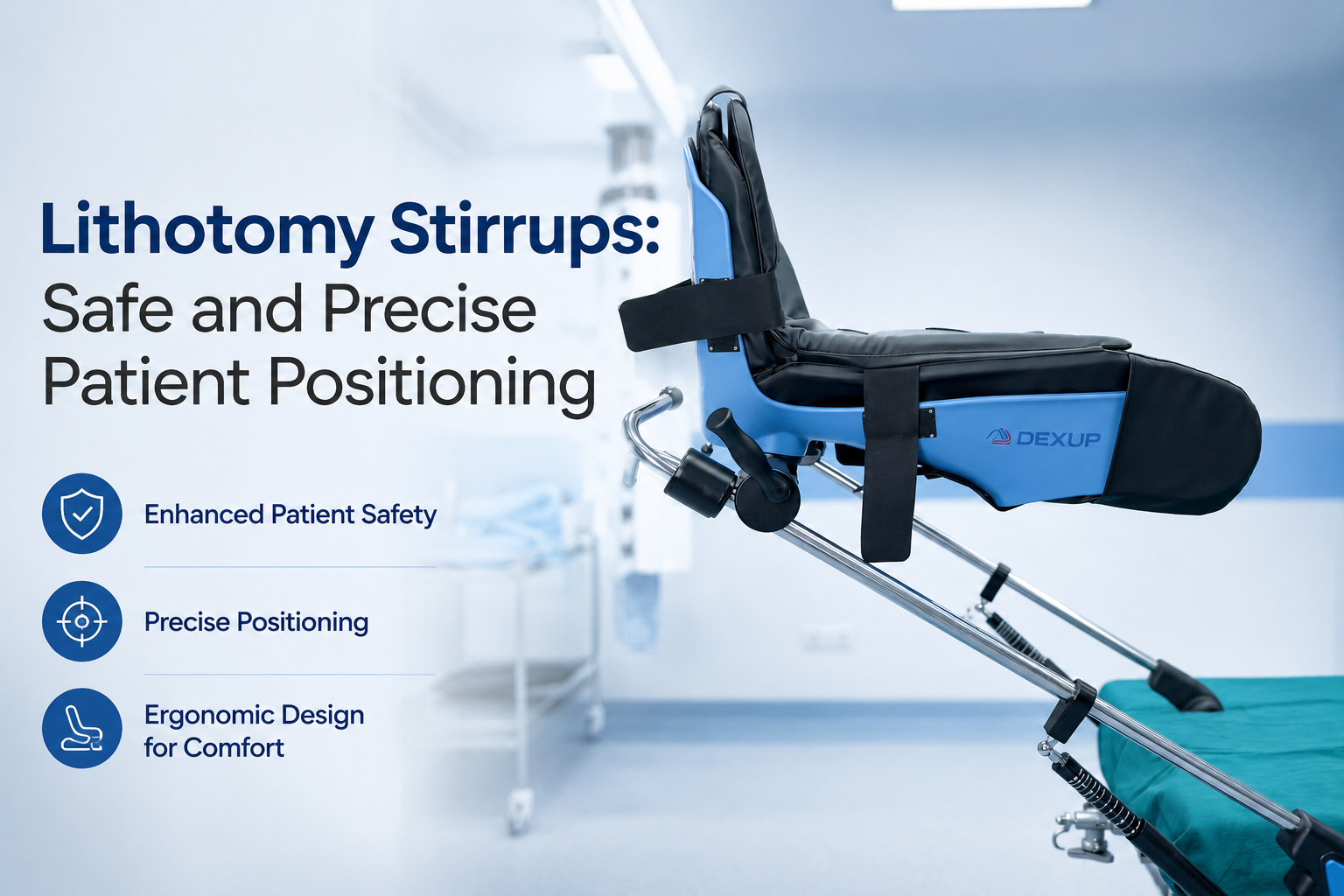
Lithotomy Stirrups: Safe and Precise Patient Positioning

What Are Lithotomy Stirrups and Why Are They Important in Surgery?
Patient positioning is one of the most critical yet often overlooked aspects of successful surgery.
While surgeons focus on precision and clinical outcomes, proper patient support systems play an equally important role in ensuring safety, accessibility, and procedural efficiency.
In fact, these support systems contribute significantly to both patient well-being and surgical success.
Among these support systems, lithotomy stirrups are essential devices used to position and support a patient’s legs during procedures that require access to the pelvic, perineal, rectal, urinary, or lower abdominal regions.
As a result, they are widely utilized across various surgical specialties where optimal access and patient stability are crucial.
Modern lithotomy stirrups have evolved significantly from traditional leg supports.
Today, they are designed to provide ergonomic support, reduce pressure injuries, and enable precise positioning, they have become a standard component in operating rooms across gynecology, urology, colorectal, laparoscopic, and robotic surgery departments.
In this article, we’ll explore what lithotomy stirrups are, why surgeons use them, the surgeries they support, how they compare with conventional stirrups, and the features healthcare facilities should consider when selecting a modern lithotomy positioning system.
What Is the Lithotomy Position?
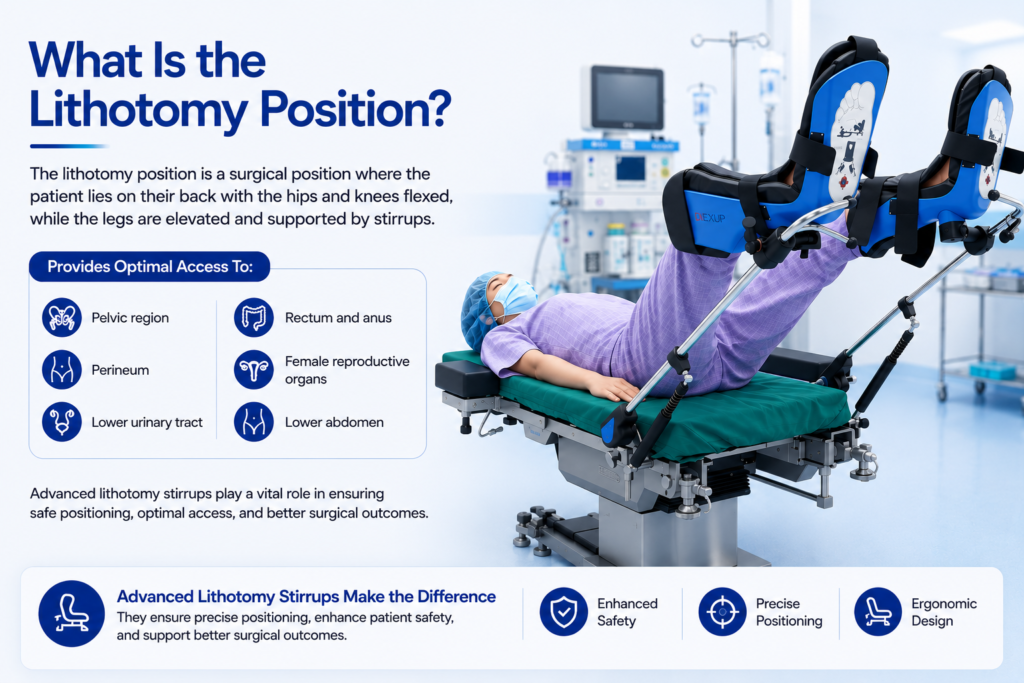
The lithotomy position is a surgical position where the patient lies on their back with the hips and knees flexed, while the legs are elevated and supported by stirrups.
This position provides surgeons with optimal access to the:
- Pelvic region
- Perineum
- Lower urinary tract
- Rectum and anus
- Female reproductive organs
- Lower abdomen
Because many surgical procedures require extended periods in this position, maintaining proper leg alignment and pressure distribution becomes critical.
Poor positioning can lead to nerve compression, muscle strain, circulation issues, and postoperative complications.
This is where advanced lithotomy stirrups play a vital role.
Why Do Surgeons Use Lithotomy Stirrups?
Surgeons use lithotomy stirrups primarily to achieve three goals:
1. Improved Surgical Access
The lithotomy position allows unobstructed access to the operative field.
Properly adjusted stirrups maintain consistent leg positioning throughout the procedure, enabling surgeons to work efficiently without repeated repositioning.
2. Patient Safety
Extended surgical procedures can place significant stress on the patient’s legs, nerves, and vascular structures.
Modern stirrups help:
- Distribute pressure evenly
- Reduce nerve compression
- Minimize muscle strain
- Support proper circulation
- Prevent accidental movement
3. Surgical Team Efficiency
Positioning patients manually can be time-consuming and labor-intensive.
Adjustable stirrup systems simplify setup and allow operating room teams to achieve accurate positioning quickly and consistently.
Which Surgeries Use Lithotomy Stirrups?
Lithotomy stirrups are commonly used across multiple surgical specialties.
a) Gynecology Procedures
Gynecologists frequently use during:
- Hysterectomy
- Dilation and curettage (D&C)
- Cervical procedures
- Pelvic floor reconstruction
- Vaginal surgeries
- Endometriosis treatment
- Fertility procedures
The position provides direct access to the female reproductive organs while ensuring patient stability.
b) Urology Procedures
Urologists rely on lithotomy positioning for procedures such as:
- Cystoscopy
- Ureteroscopy
- Prostate surgery
- Bladder surgery
- Stone removal procedures
- Urethral reconstruction
Because these procedures often require precise access to the urinary tract, stable leg positioning is essential.
c) Colorectal and Anorectal Surgery
Stirrups are widely used in:
- Hemorrhoid surgery
- Fistula repair
- Rectal surgery
- Anal fissure procedures
- Colorectal interventions
The position provides optimal exposure of the anorectal region.
d) Laparoscopic Surgery
Minimally invasive surgeries frequently require lithotomy positioning, including:
- Pelvic laparoscopic procedures
- Advanced gynecological laparoscopy
- Urological laparoscopy
The position helps surgeons achieve better instrument access while maintaining patient stability.
e) Robotic Surgery
Robotic-assisted procedures often require highly precise and stable positioning throughout lengthy operations.
Common examples include:
- Robotic hysterectomy
- Robotic prostatectomy
- Robotic colorectal surgery
- Pelvic reconstructive surgery
Modern lithotomy stirrups are particularly valuable in robotic procedures because even minor patient movement can impact surgical accuracy.
Risks Associated with Improper Lithotomy Positioning
Although the lithotomy position is widely used, incorrect positioning can create complications.
Potential risks include:
a) Nerve Injuries:
Improper leg support may contribute to:
- Common peroneal nerve injury
- Sciatic nerve injury
- Femoral nerve compression
b) Pressure Injuries:
Extended pressure on vulnerable areas can lead to:
- Pressure ulcers
- Soft tissue damage
- Skin breakdown
c) Circulatory Problems:
Poor positioning may increase the risk of:
- Venous stasis
- Lower limb swelling
- Deep vein thrombosis (DVT)
d) Muscle and Joint Strain:
Excessive abduction or rotation may result in:
- Muscle strain
- Tendon injury
- Joint discomfort
These risks have driven the healthcare industry toward more advanced stirrup designs focused on ergonomic support and pressure management.
Lithotomy Stirrups vs Conventional Stirrups: What’s the Difference?
One of the most common questions among surgical teams is whether modern lithotomy stirrups provide meaningful advantages over traditional leg holders.
The answer is increasingly yes.
a) Conventional Stirrups:
Traditional stirrups typically support only a limited portion of the leg, often around the ankle or calf.
Advantages:
- Lower initial cost
- Familiar design
- Suitable for shorter procedures
Limitations:
- Uneven pressure distribution
- Increased risk of nerve compression
- Less ergonomic support
- Greater likelihood of patient discomfort
- Limited positioning flexibility
b) Modern Lithotomy Stirrups:
Modern stirrup systems use contoured leg boots and advanced adjustment mechanisms to support a larger portion of the lower extremity.
Advantages:
- Better pressure distribution
- Enhanced patient comfort
- Reduced nerve injury risk
- Improved positioning precision
- Faster setup and adjustment
- Better support for long-duration procedures
Comparison Table:
| Feature | Conventional Stirrups | Modern Lithotomy Stirrups |
| Leg Support Area | Limited | Full leg and foot support |
| Pressure Distribution | Moderate | Excellent |
| Nerve Protection | Basic | Enhanced |
| Patient Comfort | Moderate | High |
| Positioning Flexibility | Limited | Extensive |
| Long Procedures | Less Suitable | Highly Suitable |
| Robotic Surgery Compatibility | Limited | Excellent |
| Ergonomic Design | Basic | Advanced |
For complex, minimally invasive, and robotic procedures, stirrups have become the preferred choice in many operating rooms.
Key Features of Modern Lithotomy Stirrups
When evaluating a lithotomy stirrup system, healthcare facilities typically focus on several critical features.
a) Adjustable Positioning
Advanced systems allow:
- Vertical adjustment
- Horizontal adjustment
- Abduction control
- Flexion and extension control
This flexibility helps surgeons achieve procedure-specific positioning requirements.
b) Ergonomic Leg Boots:
Unlike conventional supports, leg boots cradle the leg and foot, helping distribute pressure over a larger surface area.
c) Soft Pressure-Relieving Padding:
Protective padding helps reduce:
- Pressure sores
- Calf compression
- Skin irritation
- Long-duration discomfort
d) Secure Fixation:
Reliable fixation mechanisms prevent unwanted movement during surgery while maintaining patient safety.
e) Compatibility with Operating Tables:
Modern systems often include universal mounting solutions compatible with multiple operating table standards.
The Growing Role of Lithotomy Stirrups in Robotic Surgery
Robotic-assisted surgery continues to grow worldwide.
Procedures can last several hours, requiring patients to remain in a stable position throughout the operation.
For robotic surgery, positioning systems must provide:
- Exceptional stability
- Repeatable alignment
- Pressure management
- Easy intraoperative adjustments
Lithotomy stirrups help meet these requirements, making them increasingly common in robotic gynecology, urology, and colorectal surgery programs.
A Look at Modern Solutions: Dexup Lithotomy Stirrups
As operating rooms increasingly adopt advanced positioning systems, manufacturers have focused on combining patient safety, ergonomic support, and surgical efficiency.
One example is the Dexup Lithotomy Stirrups, designed for procedures requiring lithotomy positioning across gynecology, urology, anorectal, laparoscopic, and robotic surgery applications.
The system incorporates a leg-boot design intended to distribute pressure more evenly while providing support during extended surgical procedures.
The device also features soft protective padding, multi-directional adjustment capabilities, and compatibility with multiple operating table standards.
With support for patients up to 180 kg and a wide range of vertical and horizontal adjustments, such systems reflect the industry’s movement toward safer and more versatile surgical positioning solutions.
Frequently Asked Questions (FAQ)
Lithotomy stirrups are used to support and position a patient’s legs during surgeries involving the pelvic, urological, gynecological, anorectal, and lower abdominal regions.
Common procedures include hysterectomy, cystoscopy, ureteroscopy, prostate surgery, hemorrhoid surgery, laparoscopic surgery, and robotic-assisted procedures.
Modern lithotomy stirrups provide improved pressure distribution, greater patient comfort, enhanced nerve protection, and more precise positioning capabilities.
Yes. Improper positioning may lead to nerve injuries, pressure ulcers, muscle strain, and circulation-related complications. Proper stirrup selection and positioning techniques help reduce these risks.
Yes. Robotic procedures often require stable, precise positioning for extended durations, making advanced stirrups particularly valuable.
Conclusion
Lithotomy stirrups have evolved from simple leg supports into sophisticated surgical positioning systems that contribute directly to patient safety and procedural success.
Whether used in gynecology, urology, colorectal surgery, laparoscopy, or robotic-assisted procedures, lithotomy stirrups help surgeons achieve optimal access while reducing positioning-related complications.
As healthcare facilities continue prioritizing patient outcomes, ergonomic support, and operating room efficiency, advanced lithotomy stirrup systems are becoming an increasingly important component of modern surgical practice.
Choosing a well-designed solution that combines pressure management, flexibility, and secure support can make a meaningful difference for both surgical teams and patients.